
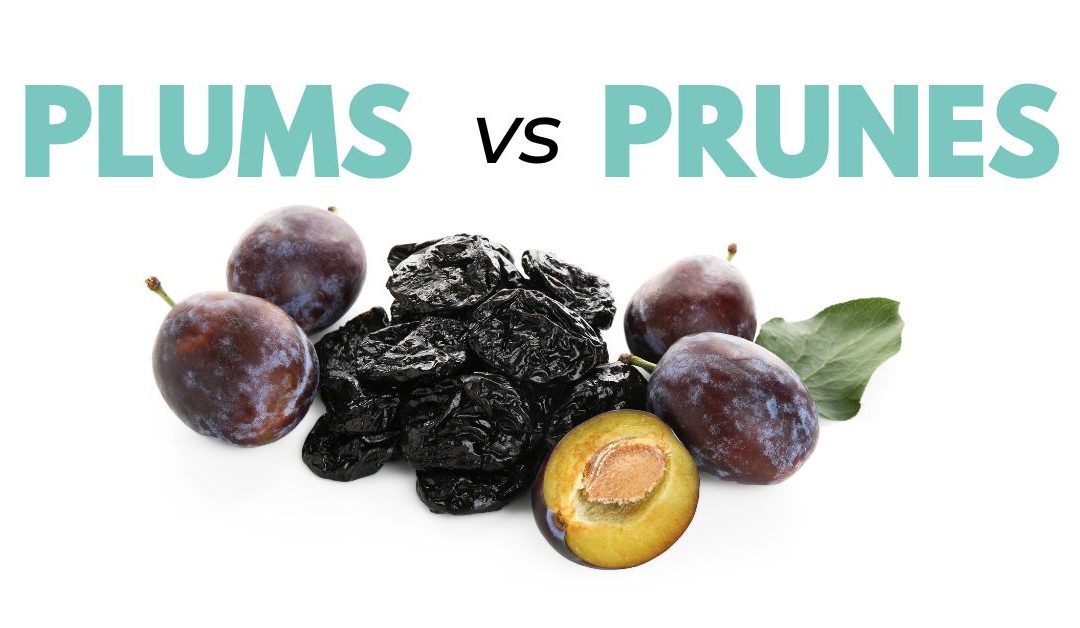
Quick answer: Plums and prunes both support gut health, but in different ways. Fresh plums offer hydration, polyphenols, and a gentler fiber boost with a lower glycemic impact. Prunes deliver a more concentrated dose of fiber, sorbitol, and prebiotics—making them particularly effective for constipation relief. The best choice depends on your unique gut needs.
Table of Contents
Picture the dried fruit aisle at your local grocery store. You reach for a bag of prunes, then pause—should you grab fresh plums instead? Are they even that different? And more importantly, which one is actually going to do something for your gut?
If you’ve been there, you’re not alone. Gut health is a topic that can feel overwhelming at the best of times. There’s always a new “superfood” making headlines, a trending supplement, or a conflicting piece of advice that leaves you more confused than when you started. The last thing you need is to stand in the produce aisle second-guessing your fruit choices.
Hey there – I’m Amanda. As a registered dietitian working to support your gut health, my philosophy is simple: there’s no one-size-fits-all approach to gut health. But understanding your food—really understanding it—is a great place to start. Knowledge is empowering, and small, informed choices add up over time.
So, let’s break it down. This post will walk you through the key differences between plums and prunes, how each one supports your digestion, and how to figure out which option is the right fit for your gut. By the end, you’ll have a clear, practical framework to guide your next grocery run—wahoo!
Plums vs. Prunes: Are They Really That Different?
Here’s something that surprises a lot of people: prunes are just dried plums. That’s it. But there’s a catch—not just any plum becomes a prune. Only specific varieties (most commonly the European plum, or Prunus domestica) have the right sugar-to-water ratio for drying without fermentation (1).
The drying process dramatically changes the fruit’s nutritional profile (2, 3). Water is removed, which concentrates the sugars, calories, and nutrients. What you end up with is a smaller, chewier, more calorie-dense version of the original fruit—with some unique gut-health properties that fresh plums simply don’t have.
Here’s a quick side-by-side comparison to put things in perspective.
- 1 average, medium plum weighs about 66g.
- One large plum is about 100g.
- About 9-10 dried prunes weigh 100g.
| Nutrient (per 100g) | Fresh Plum | Prune (Dried) |
| Calories | ~60 kcal | ~240 kcal |
| Sugar | ~9.9g | ~38g |
| Fiber | ~1.3g | ~7g |
| Iron | <0.25 mg | ~.93mg |
| Potassium | ~186mg | ~732mg |
| Vitamin K | ~6.4mcg | ~59.5mcg |
The numbers help to illustrate the differences: prunes are more nutrient-dense by weight, but also significantly higher in sugar and calories. Neither is “better” —they’re simply different tools for different gut health goals.
The Gut Health Case for Fresh Plums
Fresh plums might not have the same gut health reputation as prunes, but don’t underestimate them.
How does fiber in fresh plums support digestion?
Fresh plums contain dietary fiber that supports healthy bowel movements and feeds the beneficial bacteria living in your gut. While the fiber content per 100g is lower than that of prunes, the high water content of fresh plums (around 87%) plays an equally important role. Hydration keeps things moving through your digestive tract smoothly, which matters more than most people realize.
What role do polyphenols in plums play for gut health?
Plums are rich in polyphenols, particularly anthocyanins—the compounds responsible for their deep red and purple skin. BTW – anthocyanins are the same compounds found in blueberries and are what make them such a healthy choice (4).
Research has shown that polyphenols act as prebiotics, selectively feeding beneficial gut bacteria and helping to reduce gut inflammation. They also support the integrity of the gut lining, which is central to long-term digestive health.
Are plums a better option for blood sugar management?
Fresh plums have a relatively low glycemic index (around 39–53, depending on variety), meaning they cause a slower, more gradual rise in blood sugar compared to prunes (5). For anyone managing blood sugar sensitivity alongside gut health—which is more common than most people think—fresh plums may be the smarter everyday choice.
The Gut Health Case for Prunes
Prunes have a long history as a go-to remedy for digestive sluggishness, and the science actually backs that up.
Why are prunes so effective for constipation relief?
Three key compounds work together to get things moving:
- Sorbitol: A naturally occurring sugar alcohol that draws water into the intestines, softening stool and stimulating bowel movements.
- Soluble fiber: Forms a gel in the gut that slows digestion and softens stool consistency.
- Insoluble fiber: Adds bulk to stool and speeds up its passage through the colon.
Think of it this way: one study showed that eating about 7–8 prunes a day was more effective at relieving mild constipation than a popular fiber supplement, psyllium husk. Participants found their bowel movements became more regular and consistent, making prunes a powerful, natural solution (6).
Do prunes have prebiotic benefits?
Yes—and this is where prunes really shine. Research suggests that prunes support the growth of beneficial gut bacteria, including Bifidobacterium and Lactobacillus, two of the most well-studied strains associated with gut health. Feeding these bacteria helps maintain a balanced microbiome, which influences everything from digestion to immune function and even mood.
What other nutrients in prunes support gut health?
Beyond fiber and sorbitol, prunes are rich in potassium (which supports smooth muscle contractions in the gut), magnesium (which has mild natural laxative effects), and vitamin K (which plays a role in overall digestive function). The concentration of these nutrients—a result of the drying process—makes prunes a genuinely powerful gut health food.
Which One Is Better for YOUR Gut?
This is the question everyone wants a definitive answer to, and the truth is: it depends.
That’s not a cop-out—it’s the foundation of the Mindful Gut® approach. Every body is different. Your gut microbiome is as unique as your fingerprint, and what works brilliantly for your best friend might cause bloating or discomfort for you.
That said, here’s a simple framework to help guide your choice:
- Struggling with constipation? Prunes may offer faster, more targeted relief thanks to sorbitol and their high fiber content.
- Looking for a gentle, everyday fiber boost? Fresh plums are a lighter, less concentrated option that’s easier on the system.
- Managing blood sugar sensitivity? Opt for fresh plums—their lower glycemic impact makes them the safer choice.
- Following a lower-calorie or lower-sugar diet? Fresh plums win here, with significantly fewer calories and less sugar per serving.
- Want to support your gut microbiome long-term? Both plums and prunes offer prebiotic benefits, but prunes have stronger research behind their microbiome-supporting effects.
Neither option is “bad.” The goal isn’t to label foods as good or bad—it’s to understand what each food does and choose based on what your gut actually needs right now.
How to Add Plums and Prunes to Your Gut-Friendly Diet
The best gut health foods are the ones you’ll actually eat consistently. Here are some simple, approachable ways to work both into your routine.
Fresh plums:
- Slice over oatmeal or yogurt for a naturally sweet breakfast
- Blend into a smoothie with ginger, spinach, and coconut water (I have a few smoothie recipes for you to check out here.)
- Eat as a snack on their own—they’re portable and satisfying.
Prunes:
- Stir chopped prunes into overnight oats or porridge.
- Add to slow-cooked stews, tagines, or braised meat dishes for depth of flavor.
- Blend into energy balls with oats, almond butter, and dark chocolate.
- Eat a few on their own as an afternoon snack.
Try this: Prune & Walnut Overnight Oat Jar
A simple, gut-friendly recipe to get you started:
- ½ cup rolled oats
- 1 cup unsweetened almond milk
- 4–5 chopped prunes
- 1 tbsp chia seeds
- A handful of walnuts
- ½ tsp cinnamon
Combine everything in a jar, stir well, and refrigerate overnight. In the morning, give it a stir and enjoy it cold or warmed up. The combination of soluble fiber, prebiotics from the prunes, and omega-3s from the walnuts makes this a genuinely gut-supportive breakfast.
One important note on portion size: Prunes contain sorbitol, and too much sorbitol can cause bloating, gas, or loose stools. If you’re new to prunes, start with 3–5 per day and see how your body responds before increasing.
What to Watch Out For
Both plums and prunes are healthy, whole foods—but that doesn’t mean more is always better.
Eating too many prunes in one sitting is probably the most common mistake people make. The sorbitol content that makes them so effective for constipation can also cause bloating, cramping, or loose stools when consumed in excess. The same goes for fresh plums if eaten in large quantities—their natural sugars and fiber can still cause digestive discomfort if your gut isn’t used to them.
Individual tolerance varies enormously, and this is something the Mindful Gut® approach takes seriously. Rather than following a rigid food rule—”eat 10 prunes a day” or “never eat fruit after dinner”—the most valuable thing you can do is track how your body responds. Keep a simple food and symptom journal, even just for a week or two. Patterns emerge quickly, and those patterns are your gut talking.
Trust those signals. Your body is constantly giving you feedback—the goal is learning to listen.
Trust Your Gut (Literally)
Plums and prunes both earn their place in a gut-friendly diet. Prunes bring a concentrated, clinically supported punch for constipation relief, microbiome support, and nutrient density. Fresh plums offer a gentler, lower-sugar option with hydration, anti-inflammatory polyphenols, and blood sugar-friendly fiber.
The “best” choice isn’t universal—it’s the one that aligns with your body’s current needs, your health goals, and honestly, the one you’ll actually enjoy eating.
Start small. Try a few prunes with your breakfast this week, or slice a fresh plum into your next smoothie. Pay attention to how you feel in the hours that follow. Curiosity and self-awareness are at the heart of the Mindful Gut® philosophy, and it’s where real, lasting gut health begins.
Want more personalized guidance on what to eat for your gut? Join Amanda’s Mindful Gut® community for weekly tips, practical advice, and support from people who get it. [Sign up here]

Frequently Asked Questions
How many prunes should I eat per day for gut health?
A good starting point is 3–5 prunes per day if you’re new to eating them. Research suggests that 50g (roughly 7–8 prunes) per day is effective for improving stool frequency and consistency. Start small and increase gradually to avoid bloating or loose stools from the sorbitol content.
Are prunes better than plums for constipation?
For constipation specifically, yes—prunes are generally more effective. They contain sorbitol (a natural laxative), a higher concentration of soluble and insoluble fiber, and magnesium, all of which work together to stimulate bowel movements. Fresh plums can support regularity through hydration and fiber, but they don’t have the same targeted effect.
Can plums and prunes cause bloating?
They can, especially if eaten in large amounts. Prunes in particular contain sorbitol, a sugar alcohol that some people are sensitive to. If you’re prone to bloating or have IBS, start with a small serving and see how your body responds before increasing your intake.
What’s the difference between dried plums and prunes?
There’s no functional difference—”dried plums” and “prunes” refer to the same product. The term “dried plums” was introduced partly to rebrand prunes for a broader audience, but nutritionally and practically, they are identical.
Are prunes good for gut bacteria?
Yes. Research has shown that regular prune consumption can support the growth of beneficial gut bacteria, including Bifidobacterium and Lactobacillus (7). This prebiotic effect contributes to a healthier, more balanced gut microbiome over time.
Is it better to eat plums or prunes for blood sugar management?
Fresh plums are the better choice for blood sugar management. They have a lower glycemic index than prunes, meaning they cause a slower rise in blood sugar. Prunes are higher in concentrated sugars due to the drying process, so they should be eaten in moderation if blood sugar is a concern.
You may also like:
- Gut Health and Sleep – Learn how your sleep patterns and gut health are intricately connected and tips to support both.
- Can Stress Cause Gas? – Discover the fascinating link between stress and your digestive system, with strategies to ease discomfort.
- Superfoods for Gut Health – Explore a list of superfoods that can boost your gut microbiome and support overall wellness.
That’s a wrap
And there you have it! We’ve unpacked the juicy details on plums and prunes, revealing that they’re the same fruit, just in different forms. Both offer a wealth of benefits that support not only your digestive system but your whole-body health.
Remember, small steps can lead to big changes for your overall wellness. Want to continue your gut health journey with a supportive community? Join us here and connect with others who are prioritizing their well-being. Your gut will thank you!

Amanda is a pizza loving registered dietitian nutritionist specializing in mindfulness and gut health. She quickly realized that gut health goes beyond the gut; it is also about honoring our gut feelings. She is the creator of The Mindful Gut™ which uses science and strategy to help people improve their gut health.
