
Table of Contents
Your gut plays a vital role in your overall health, from digestion to immunity and even your mood.
But how can you tell if your gut is functioning well or if it needs some extra care? Understanding the signs of an unhealthy gut can empower you to make changes that boost not only your digestive health but your overall well-being; it’s not an exaggeration to say that your gut health is the foundation for the rest of your health – whew!
If you’ve been wondering whether your gut is happy or crying out for help, you’re in the right place. Hello and welcome – I’m Amanda, a California-based registered dietitian here to support you and your gut health. In this article, I’ll offer 10 signs of an unhealthy gut and, even better, I’ll provide actionable tips to get your digestive system on track.
Let’s dive in – starting with the nutrient that you’re probably not getting enough of fiber!

1. You’re Not Eating Fiber Consistently
Fiber is a gut-health superstar – but it is not just about poop. Yes, fiber does keep your digestive system running smoothly and helps to prevent constipation and diarrhea, but the fiber also helps to keep your microbiome well nourished. By feeding the “good” bacteria in your gut, those happy bacteria also nourish your gut.
On average, adults in the US are getting about half of the amount of fiber that we need – gasp (1)! Without enough fiber, your digestion will be much more sluggish, and your risk of chronic disease – including diabetes, cancer, and obesity – goes up (2).
What to do:
Focus on increasing your intake of fiber-rich foods like fruits, vegetables, whole grains, nuts, and seeds, a little bit at a time. If you’re not used to eating a lot of fiber, add it gradually to avoid overwhelming your system.
2. Your Diet Lacks Variety
A diverse gut microbiome contributes to better digestion and overall health (3). If your diet rarely includes a variety of plants, fermented foods, or probiotics, you may be missing out on key nutrients that nourish your gut bacteria.
What to do:
Aim to eat a “rainbow” of plant-based foods each week. Here’s a number to keep in mind: 30! Over the course of the week, aim to have a minimum of at least 30 different plant foods, and your microbiome and gut health will be much more robust.
Plus, keep fermented foods – a source of helpful microbiome-boosting critters – on your radar. How? Incorporate yogurt or fermented foods like kimchi, sauerkraut, and kefir to increase your intake of probiotics. Consistency and variety are key!
Click here to learn more about The Tangy Truth: Exploring the World of Fermented and Pickled Foods.
3. Your Poop Is Hard or Infrequent
We can’t talk about gut health without talking about…well, poop. Constipation is one of the most common indicators that your gut isn’t functioning properly. Hard, dry stools often mean your digestive system isn’t getting the hydration, fiber, or bacterial support it needs.
Did you know that there is a chart that you can look at to see what your stool is supposed to look like? Click here to see the guide. The goal is to have stools on a regular basis that look like numbers 3 and 4 on the chart.
What to do:
Drink plenty of water throughout the day, and consider incorporating more fiber and prebiotic-rich foods like bananas, onions, and garlic into your diet. For a deeper dive into all things constipation, click here: Is Your Diet Making You Constipated?
4. Your Poop Is Too Soft or Frequent
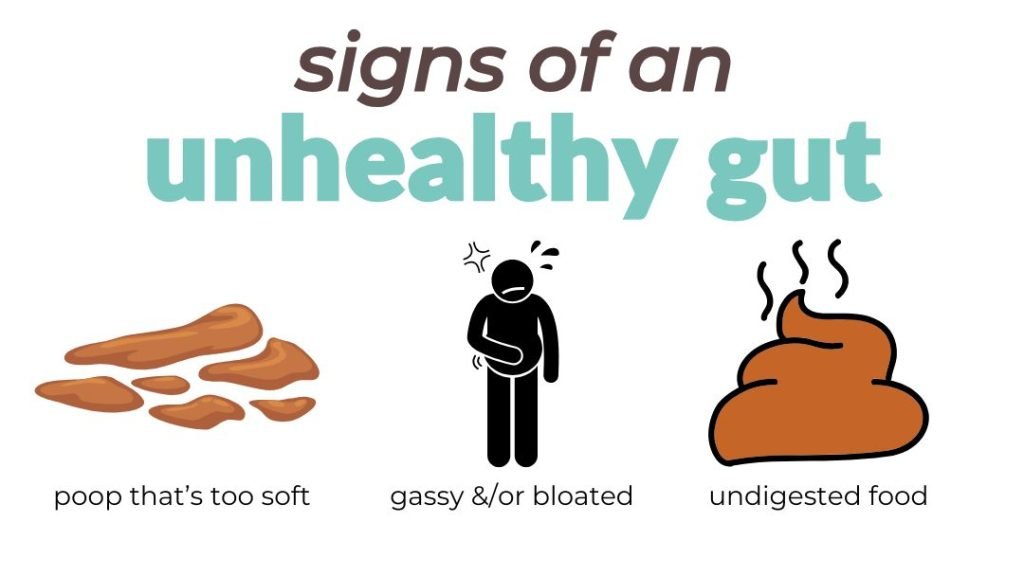
On the flip side, if your trips to the bathroom are urgent and your stool is consistently loose, it can signal an imbalance in your gut microbiome or a food sensitivity.
What to do:
Keep a food diary to identify whether certain foods might be triggering loose stools. Many people also find that adding more soluble fiber, like oats and apples, helps regulate bowel movements.
5. You Feel Gassy or Bloated Most Days
While occasional gas is normal, frequent bloating or excessive gas can indicate poor digestion or an imbalance in your gut bacteria (4). You may also feel uncomfortable or even socially anxious about these symptoms.
What to do:
Review what you’re eating. Foods like beans and carbonated drinks can contribute to gas, but persistent bloating might warrant a deeper look (5). Try eliminating potential triggers and keep tabs on if you notice any difference. You can also try enzyme supplementation with over-the-counter products such as Fodzyme, which helps your body to digest the specific elements of food that are causing your digestive system grief.
6. You Notice Undigested Food in Your Poop
Seeing bits of undigested food in your stool now and then is usually normal, but if it happens often, it may mean your body is struggling to break down your meals. This could signal enzyme deficiencies or suboptimal gut health (6).
What to do:
Consider chewing your food more thoroughly, as digestion starts in the mouth. Also, your gut may benefit from digestive enzymes or additional probiotics to support nutrient absorption.

7. You Feel Stomach Pain After Eating
Stomach pain after meals can point to food sensitivities, overeating, or imbalanced gut bacteria. Chronic issues like irritable bowel syndrome (IBS) are often tied to poor gut health (7).
Stomach pain can also be an indication of being stressed, or in “fight or flight” mode, which means your body isn’t focusing on digestion. Taking a moment to slow down and relax while eating helps your body to focus on digestion.
What to do:
Identify potential trigger foods and reduce portion sizes to avoid overwhelming your digestive system. With fewer symptoms, you can work with your healthcare provider to identify potential root causes so that you can eventually be able to eat a greater variety of foods without the same painful symptoms.
8. Your List of “Safe” Foods Is Shrinking
If you find yourself constantly eliminating foods because they seem to cause a reaction, your gut might be overactive, or your microbiome may be struggling to adapt.
What to do:
Work with a healthcare or nutrition professional to reset your gut and identify intolerances. Probiotics, along with a slow reintroduction of certain foods, might help your gut rebuild resilience.
9. Chronic Stress Is Affecting Your Gut
Stress can be hard on your gut, triggering symptoms like cramping, bloating, and changes in stool patterns. Prolonged stress may even lead to more serious digestive problems such as IBS. If you think that this might apply to you, check out this article for more details on what’s going on and how you can take action: Stress-Induced IBS: The Gut-Brain Axis at Work.
What to do:
Practice stress-management techniques like mindfulness, yoga, or deep breathing to support your gut and nervous system. A calmer mind can lead to a happier gut!
10. You Experience Other Signs of Poor Digestion
Beyond bloating or irregular stools, other symptoms like heartburn, greasy stools, or excessive burping can all suggest your gut needs attention.
What to do:
Start with the basics by adding more fiber-rich whole and minimally processed plant foods such as fruits, veggies, nuts, seeds, oats, and fermented foods. A good rule of thumb? The simpler your meals, the easier they are to digest.
If those changes aren’t making your digestion feel much better, consider other lifestyle changes. For example, if you’re struggling with GERD, I have many lifestyle modifications to consider in this article: Your Guide to Managing GERD with Smart Lifestyle Changes and a 7-Day GERD Diet Plan.
How to Begin Supporting Your Gut Health Today
If you’ve recognized yourself in some of these signs, don’t worry! The good news is that gut health can often be improved with proactive steps like those mentioned above. Small, consistent changes can make a big difference over time. Just like we have to keep cultivating our fitness by exercising throughout the week, we need to keep nurturing our gut health as well.
One great way to stay on track is to continue learning about gut health, eating habits, and managing symptoms. Join the group chat: join my gut-boosting newsletter where you’ll learn expert tips and updates on all things wellness. Your gut will thank you!

Amanda is a pizza loving registered dietitian nutritionist specializing in mindfulness and gut health. She quickly realized that gut health goes beyond the gut; it is also about honoring our gut feelings. She is the creator of The Mindful Gut™ which uses science and strategy to help people improve their gut health.
